
Topic · 12 books
The best books on free markets & human progress
The case for economic freedom spans three centuries of economic thought — from Adam Smith's moral philosophy to modern empirical work on why some nations flourish while others stagnate. At its core, this literature argues that voluntary exchange, secure property rights, price signals, and the rule of law do more to lift living standards than any centrally directed alternative. It is also a contested case: critics from Marx to Keynes to Piketty have pushed back hard, and the strongest version of the argument takes those objections seriously rather than dismissing them.
-
01
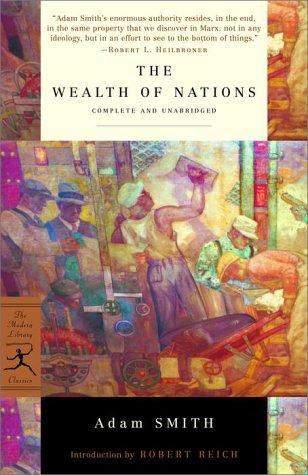
Adam Smith
The origin point. Smith's argument that specialization and voluntary exchange create wealth still underlies most of what follows. Often misread as a simple endorsement of greed; actually a nuanced account of how self-interest, constrained by competition and moral sympathy, tends toward social benefit.
-
02
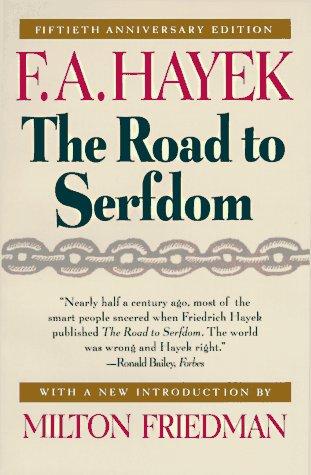
F. A. Hayek
Hayek's 1944 warning that central economic planning corrodes political freedom alongside economic efficiency. Written for a British Left audience, it argued that the path to socialism and the path to fascism share structural features. Its critics say it proves too much; its admirers say history vindicated it.
-
03
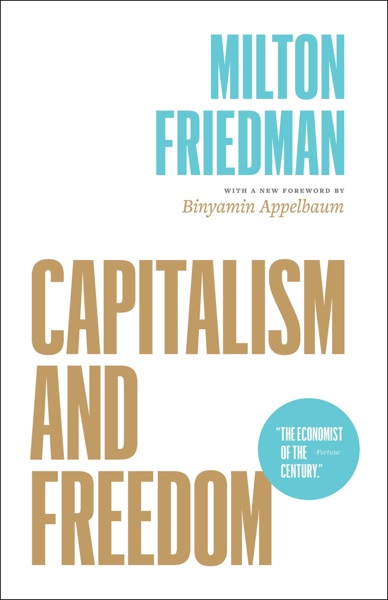
Milton Friedman
Friedman's most systematic statement of the classical-liberal case: that economic and political freedom are inseparable, and that government intervention, however well-intentioned, typically produces worse outcomes than markets. Controversial on education vouchers and monetary policy; influential on both.
-
Read these with Superbook
Chat with any book on this list — ask questions, get answers tuned to you.
-
04
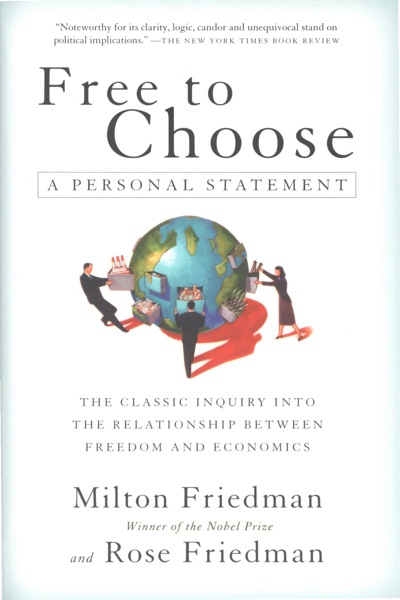
Free to Choose: A Personal Statement
Milton Friedman and Rose Friedman
The popular companion to Capitalism and Freedom, written with Rose Friedman. More accessible and more polemical. Best read as a rhetorical document as much as an economic one — it shows how free-market ideas get translated into public argument, for better and worse.
-
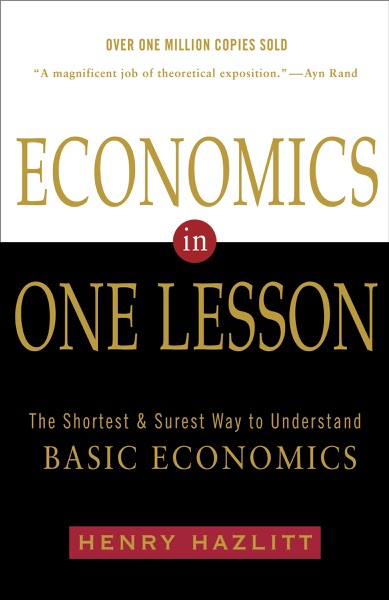
05
Henry Hazlitt
Hazlitt's 1946 distillation of Bastiat's 'broken window' insight: good economic reasoning requires seeing both what is visible and what is made invisible by a policy. A short book that teaches a single analytical habit, and that habit is genuinely useful regardless of your politics.
-
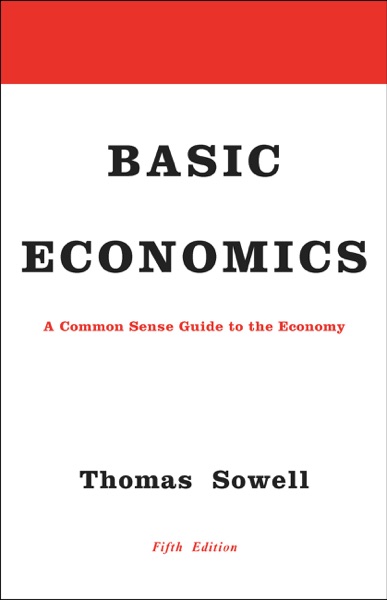
06
Basic Economics: A Common Sense Guide to the Economy
Thomas Sowell
Thomas Sowell's deliberately introductory survey of how prices, incentives, and tradeoffs work across housing, labor, international trade, and discrimination. Dense with empirical examples. Its main contribution to this list is showing the gap between policy intentions and policy consequences.
-
07
Why Nations Fail: The Origins of Power, Prosperity, and Poverty
Daron Acemoglu and James A. Robinson
Acemoglu and Robinson's institutional account of why some nations prosper and others don't. Their answer — inclusive versus extractive institutions — complicates simple free-market narratives: property rights matter, but who holds them and under what political arrangements matters just as much. Essential for any honest version of this argument.
-
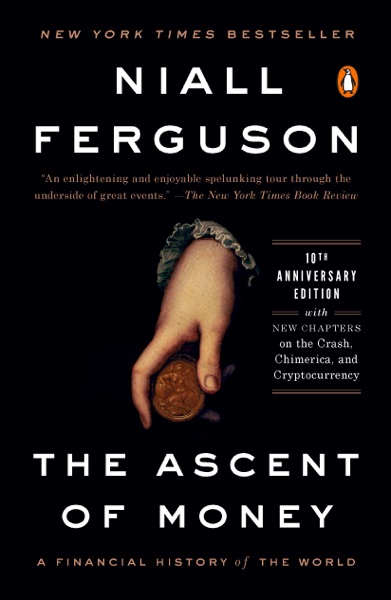
08
The Ascent of Money: A Financial History of the World
Niall Ferguson
Niall Ferguson's history of financial innovation — from Medici banking to mortgage-backed securities. Adds a dimension the other books underweight: capital markets, insurance, and credit are not peripheral to economic development but central to it. Readable but should be checked against critics of Ferguson's selective history.
-
09
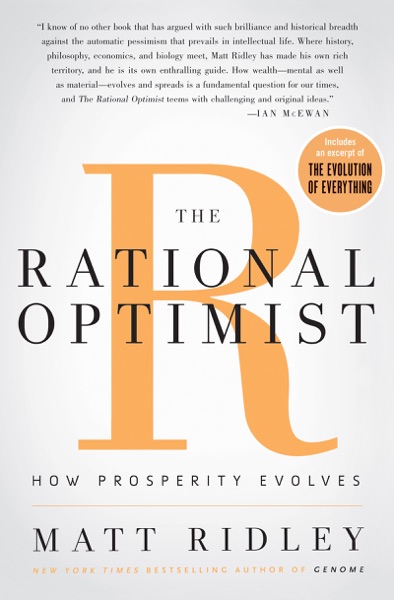
The Rational Optimist: How Prosperity Evolves
Matt Ridley
Matt Ridley's evolutionary argument that exchange and specialization are the deep engine of human progress — older than capitalism, older than agriculture. His data on long-run improvement in living standards is well-sourced; his dismissiveness toward environmental risks is the book's main weakness and worth holding separately from its core claim.
-
10
The Capitalist Manifesto: Why the Global Free Market Will Save the World
Johan Norberg
Johan Norberg's direct defense of global capitalism against its critics. Norberg engages seriously with inequality, labor conditions, and environmental objections rather than ignoring them. The most current and combative of the foundational texts on this list.
-
11
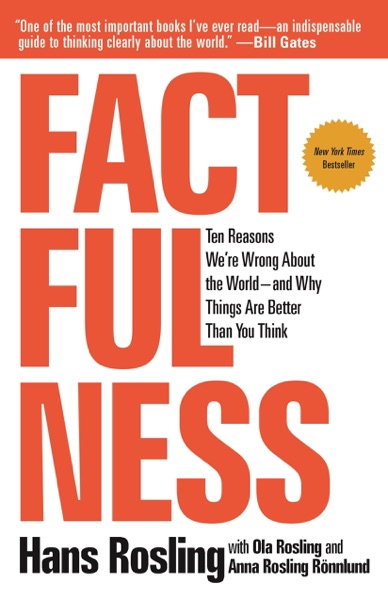
Factfulness: Ten Reasons We're Wrong About the World
Hans Rosling
Hans Rosling was a global health professor, not an economist, which gives his data-driven case for human progress particular credibility. He shows, in meticulous detail, that almost every quantitative measure of human welfare has improved dramatically over the past century. He attributes this to global trade and economic development without being a polemicist.
-
12
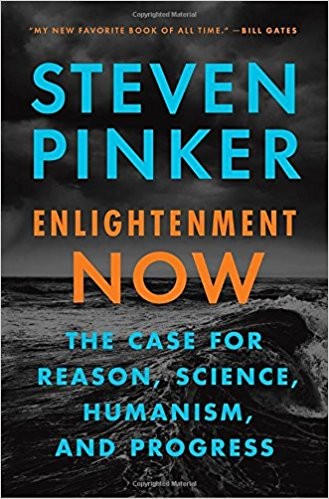
Steven Pinker
Steven Pinker's 500-page empirical survey of progress across 15 dimensions: health, wealth, equality, safety, knowledge, quality of life. Explicitly frames market economies and Enlightenment liberalism as the institutional sources of that progress. Has been criticized for cherry-picking metrics and underweighting catastrophic risks; the data itself is worth engaging with regardless.
More about this list
This list is built as an argument, not a syllabus. It moves through three phases: the foundational ideas that explain how free markets work and why they generate wealth; the institutional research that explains why some countries get rich and others don't; and the empirical record showing what actually happened to human welfare over the past two centuries.
Start with Smith, Hayek, and Friedman and you get the logic — prices coordinate dispersed information, freedom enables specialization, and spontaneous order outperforms central planning. Then read Hazlitt and Sowell to sharpen the analytical tools: economics is largely about seeing the consequences that aren't immediately visible. By the halfway point, the reader has a framework.
Why Nations Fail then stress-tests that framework against history and political science. Acemoglu and Robinson are not dogmatic free-marketeers — their argument is about institutions, not markets per se — and their evidence is awkward for simple libertarian narratives (colonies that had the 'right' policies still failed if the underlying institutions extracted rather than included). The Ascent of Money adds a financial layer: credit, debt, and risk management are part of the story too.
The final arc — Ridley, Norberg, and Pinker — makes the empirical case that, whatever the theoretical debates, the world measurably got better on almost every metric as trade and markets expanded. Factfulness is the most disarming of the three: Hans Rosling was not a free-market ideologue, which makes his data on global poverty reduction harder to dismiss.
A genuine engagement with this literature requires also reading its critics. The case against markets — from Piketty on inequality, to Polanyi on social dislocation, to the environmental economics literature on externalities — is not answered by these books. They make a specific, powerful argument. The honest reader treats it as one side of a serious debate.
