
Reading list · 15 books
Tyler Cowen's reading list
Tyler Cowen is an economist at George Mason University, co-founder of the Marginal Revolution blog, and host of the Conversations with Tyler podcast. He reads several books a week across economics, history, literature, philosophy, and food writing, and publishes recommendations and reviews on the blog continuously. His taste prizes the undervalued and the exotic: he is as likely to recommend a 19th-century Romanian novel as a recent game-theory text, and his food writing explores why cheap ethnic restaurants outperform expensive ones.
-
01
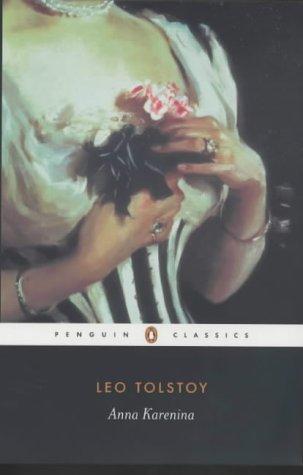
Leo Tolstoy
One of Cowen's most frequently cited novels. He has argued on the blog that Tolstoy's apparent digressions on farming, politics, and religion are not digressions at all — they are the mechanism by which the psychological portraits achieve their depth. Reading it carefully changes how you read any long fiction afterward.
-
02
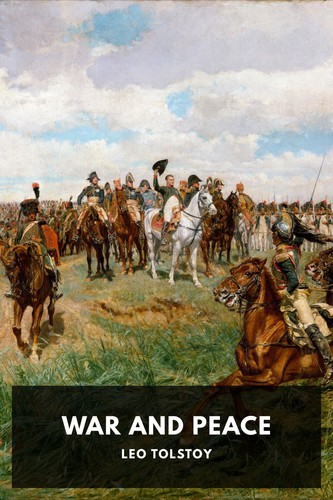
Leo Tolstoy
Cowen recommends reading War and Peace in full rather than in abridgment, and specifically recommends reading it more than once. He has described it as the best account in literature of how large historical forces interact with individual decision-making — and a corrective to any theory of history that over-weights individual agency.
-
03
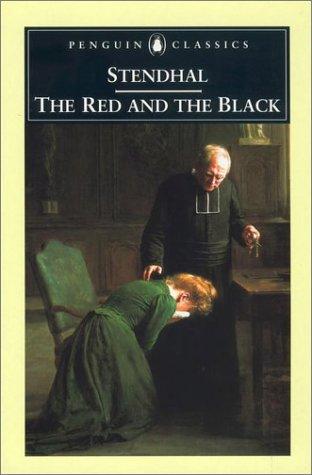
Stendhal
In Conversations with Tyler and on Marginal Revolution, Cowen returns to Stendhal's portrait of Julien Sorel as an economics case study as much as a novel: a man calculating every move within institutions that pretend not to be games. Cowen reads it as one of the most honest accounts of ambition and status-seeking in print.
-
Read these with Superbook
Chat with any book on this list — ask questions, get answers tuned to you.
-
04
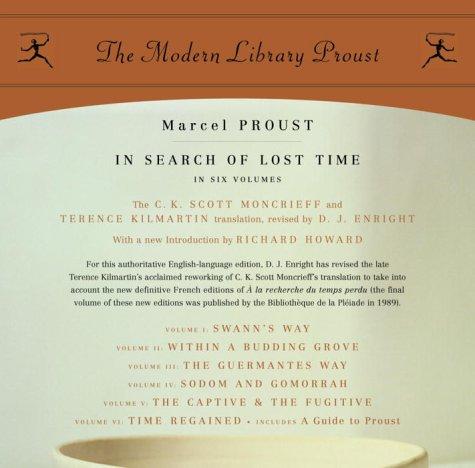
Marcel Proust
Cowen has written that Proust rewards re-reading in a way few long works do. He is interested specifically in the passages on memory and perception — not the famous madeleine set-piece but the sustained philosophical argument about what it means to know another person or to understand your own past.
-
05
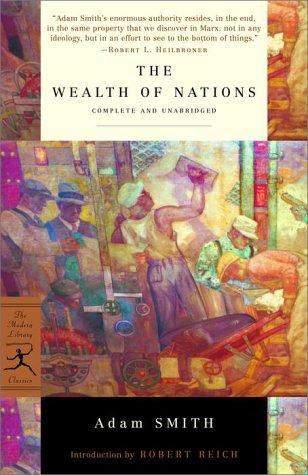
Adam Smith
Cowen recommends reading Smith in full rather than through summaries, arguing that the parts usually skipped — the historical sections, the chapters on colonies and mercantilism — contain Smith's most original thinking. The book's length and repetition are features; they force engagement with the complexity Smith is actually describing.
-
06
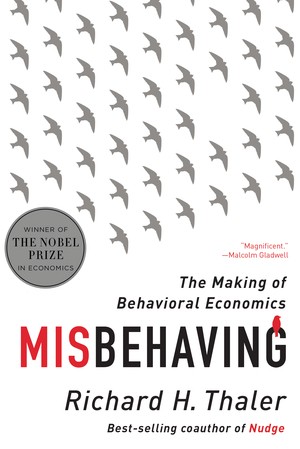
Misbehaving: The Making of Behavioral Economics
Richard H. Thaler
Cowen interviewed Richard Thaler on Conversations with Tyler and has praised this memoir-cum-manifesto for behavioral economics as the most honest account of how a heterodox academic program actually wins. The book is as much about the sociology of economics departments as about cognitive biases.
-
07
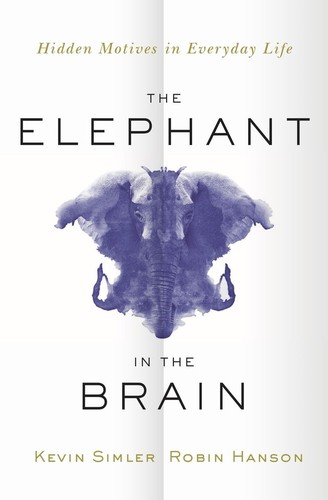
The Elephant in the Brain: Hidden Motives in Everyday Life
Kevin Simler and Robin Hanson
Cowen has called this one of the most important social science books of the past decade. Simler and Hanson's thesis — that most human behavior is driven by hidden status motives we systematically misrepresent to ourselves — maps onto questions Cowen pursues across many fields: why institutions behave as they do, why signaling is so costly, what philanthropy actually accomplishes.
-
08
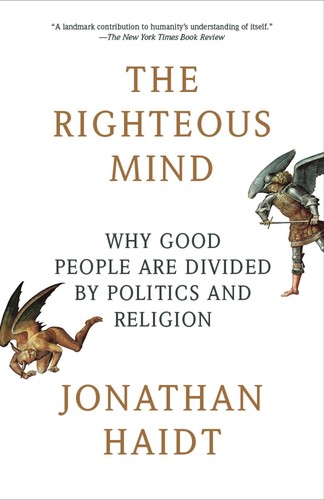
The Righteous Mind: Why Good People Are Divided by Politics and Religion
Jonathan Haidt
Recommended on Marginal Revolution and discussed across several Conversations with Tyler episodes. Cowen finds Haidt's moral foundations framework more useful as a descriptive tool than as a normative one — he cares less about Haidt's prescriptions for political reconciliation than about the cross-cultural data showing how differently moral intuitions are organized across populations.
-
09
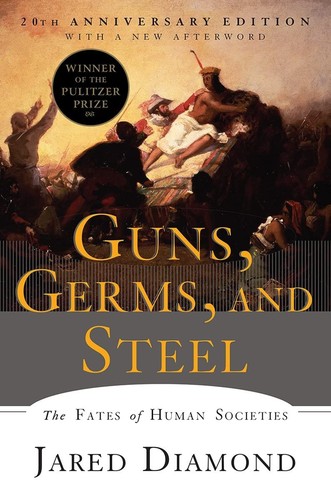
Jared Diamond
Cowen has praised Diamond's geographic explanation for why Eurasian civilizations dominated others, while noting on the blog that it underweights institutional and cultural factors. He recommends it as the best starting point for thinking about the deep roots of economic divergence, precisely because its thesis is strong enough to be seriously contested.
-
10
Why Nations Fail: The Origins of Power, Prosperity, and Poverty
Daron Acemoglu and James A. Robinson
Discussed in several Conversations with Tyler episodes. Cowen is broadly sympathetic to the Acemoglu-Robinson institutions thesis but has probed its limits in interviews — how far does it actually explain variation within countries, and what role do culture and ideas play that the framework struggles to accommodate?
-
11
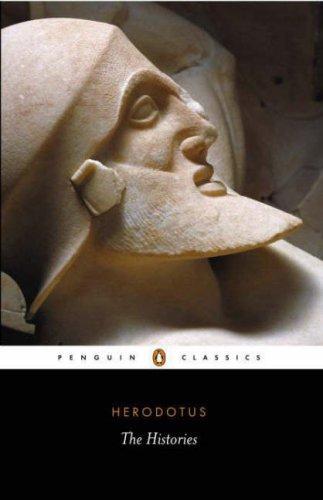
Herodotus
Cowen is an enthusiastic reader of classical history and recommends Herodotus specifically for what a modern economist finds there: a catalogue of institutions, trade routes, customs, and incentives in the ancient world that resist easy systematization. He prefers Herodotus to Thucydides for range, though he recommends both.
-
12
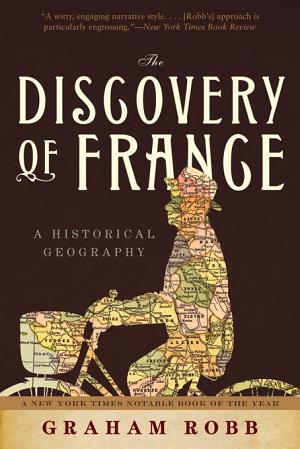
The Discovery of France: A Historical Geography from the Revolution to the First World War
Graham Robb
Cowen has recommended Graham Robb's account of pre-modern France on Marginal Revolution as an example of the kind of economic history he most values — granular, place-specific, attentive to what gets lost when you aggregate. The book's core argument, that France was not really France until the late 19th century, is a useful corrective to national-history narratives.
-
13
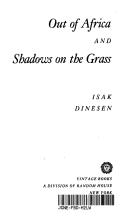
Isak Dinesen
Cowen has written about Isak Dinesen's memoir as one of the best prose stylists of the 20th century, a judgment that sits alongside his interest in food writing and his admiration for writers who can describe sensory experience with precision. He recommends it as a model of how to write about a place from the inside.
-
14
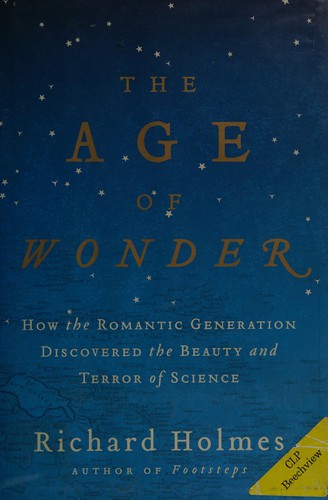
The Age of Wonder: The Romantic Generation and the Discovery of the Beauty and Terror of Science
Richard Holmes
Discussed on Marginal Revolution as an example of the kind of history of science Cowen finds most useful — not a narrative of triumphant discovery but an account of how aesthetic sensibility, risk, and cross-disciplinary borrowing shaped what got investigated. The romantic scientists in Holmes's book are recognizable to Cowen as a type he values.
-
15
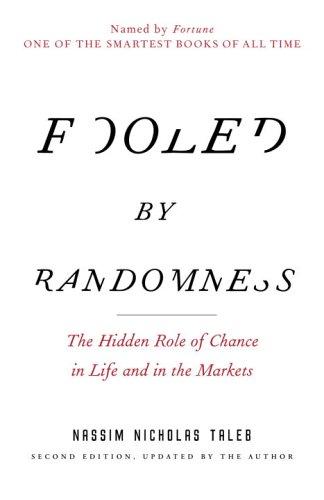
Nassim Nicholas Taleb
Cowen has praised Taleb's first major book — more than the later, angrier entries in the series — for its specific and honest account of how financial professionals misread probability. He has noted on the blog that the intellectual autobiography embedded in the book is as interesting as the finance argument.
More on Tyler Cowen's picks
Cowen's reading recommendations emerge from three main sources: the Marginal Revolution blog (running since 2003), his Conversations with Tyler interviews, and a series of shorter books he has written about reading and taste. Unlike many public intellectuals who recommend a stable canon, Cowen's list shifts constantly as he reads new things and revises older opinions — but certain threads persist.
The first thread is great fiction. Cowen argues that learning to read novels with full attention is one of the most important intellectual habits a person can build, and he is unusually specific about which novels reward re-reading. He favors books with dense informational content — Tolstoy for what he reveals about human motivation, Stendhal for how ambition actually works inside institutions, Borges for sheer conceptual precision. These are not comfort reads; they are works he thinks teach you to see more than you currently see.
The second thread runs through economics and political economy, especially books that explain why some societies prosper and others don't, and what standard economic models miss. Cowen is consistently interested in the texture of economic life — the role of food, migration, culture, and status in shaping outcomes — rather than in formal models alone.
The third thread is cross-disciplinary nonfiction that resists easy categorization: books about how science actually progresses, how human perception works, how talent develops. Cowen reads these not for takeaways but because they expand the set of frameworks he can bring to any question. His podcast interviews consistently reveal a reader who has encountered nearly every significant work in a guest's field before they sit down together.
